
Top 5 Human Errors in Cybersecurity | Managing Human Risk
Executive analysis of the most common human errors that enable cybersecurity incidents and their impact on organizational security and operational continuity.
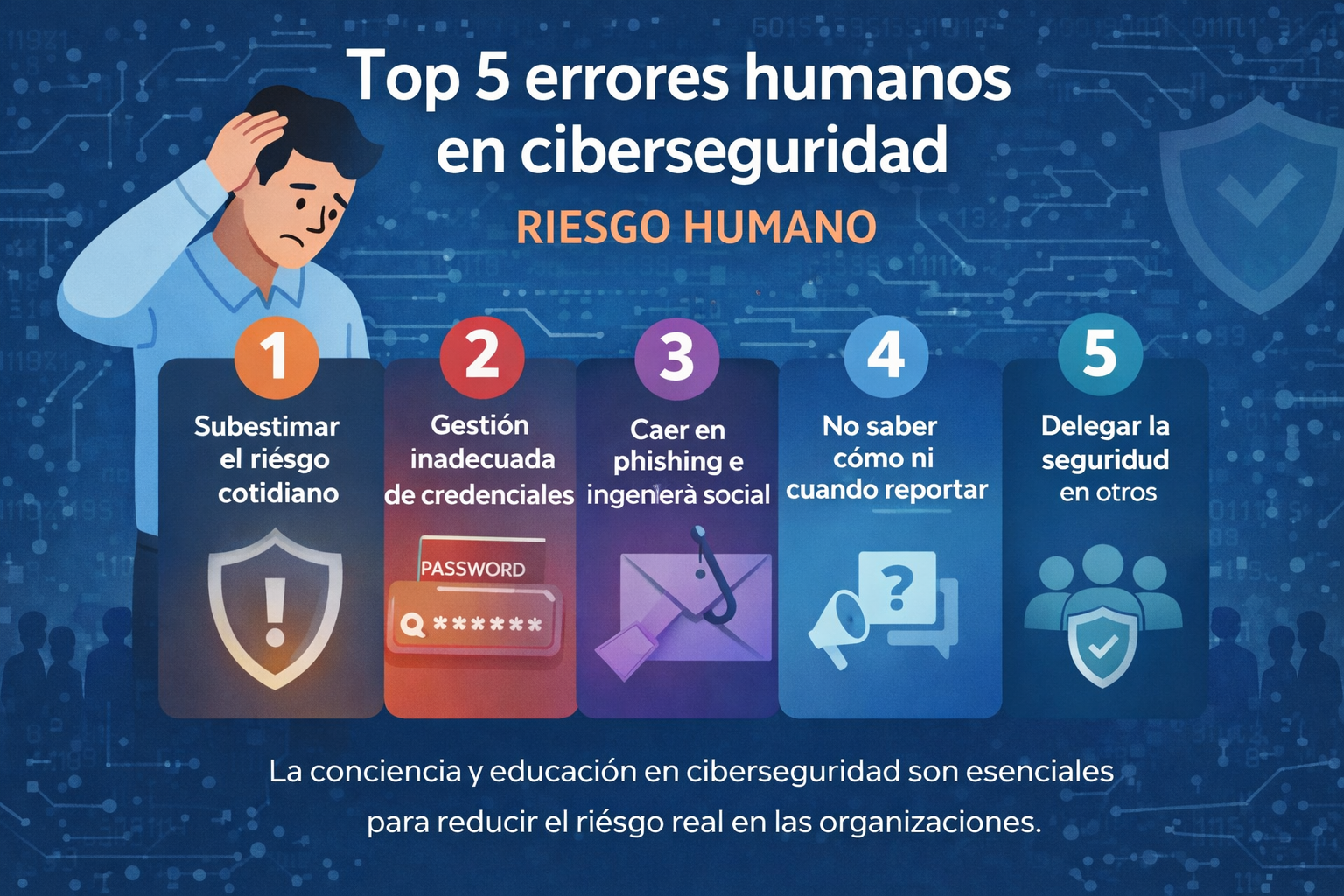
Top 5 human errors that open the door to a cybersecurity incident
When cybersecurity incidents are analyzed, they are often attributed to technical failures. However, in most cases, the initial entry point is linked to human behavior. Rushed decisions, overconfidence, or lack of awareness can open the door to attacks that later escalate rapidly.
Identifying these errors is not about assigning blame, but about understanding how human behavior directly influences risk exposure. Across organizations of all sizes, these patterns appear with striking frequency.
Underestimating everyday risk
One of the most common mistakes is assuming that cyberattacks are unlikely or only affect large enterprises. This perception leads to relaxed behavior around emails, access controls, and basic procedures, weakening the first line of defense.
Poor credential management
The use of weak, reused, or shared passwords remains widespread. Leaving sessions open or storing credentials insecurely further increases the likelihood of unauthorized access.
Falling for phishing and social engineering
Emails impersonating internal requests, urgent messages, or trusted vendors continue to be highly effective. Pressure to respond quickly and trust in the workplace environment work in favor of attackers.
Not knowing how or when to report
Many employees notice suspicious behavior but fail to report it due to uncertainty or fear of making a mistake. Delayed escalation often allows incidents to grow unnecessarily.
Delegating security to others
Treating cybersecurity as the sole responsibility of the IT team reduces engagement across the organization. When people do not see themselves as part of the defense, security controls lose effectiveness.
Reducing human error requires more than written policies. It demands continuous awareness, practical training, and a culture that encourages early reporting. For senior management, understanding human risk is critical to building true organizational resilience.
How are you managing human risk in your organization? Let’s talk →